Copyright © 2026 LP Fintech. All rights reserved.
Blog
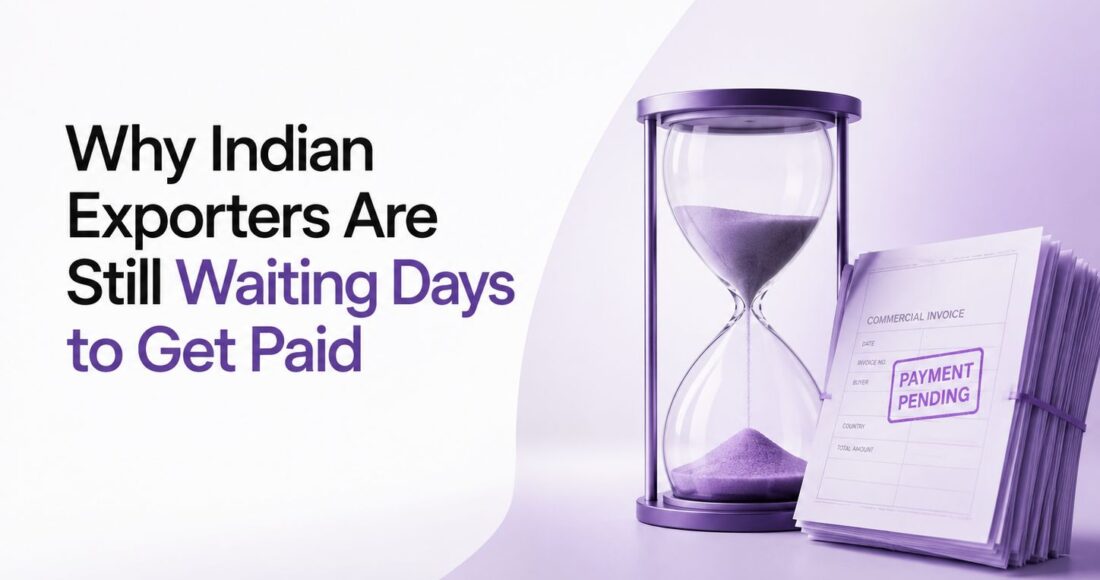
Why Indian Exporters Are Still Waiting Days to Get Paid
India processed over $820 billion in total exports in FY25. The number is growing. The payment infrastructure underneath it is not.
When an international client sends money to an Indian exporter, the SWIFT network carries the instruction. But SWIFT payments to India take an average of around three days to reach the destination account, and that is under normal conditions. When currency conversion is involved, the wait stretches to over four days on average, according to settlement data from Statrys. Add in RBI approval requirements for certain transactions, and some exporters wait the better part of a week.
This is not a fringe problem. It affects MSMEs, IT services firms, freelancers, and any business that invoices international clients. There are over 40 million registered MSMEs in India as of 2024, and a meaningful chunk of them deal with cross-border receivables.
The Hidden Cost Nobody Talks About
Beyond speed, there is the FX problem. The average cost of a cross-border payment globally runs around 6.4 percent when you factor in FX conversion and bank service fees, according to a 2024 US Treasury report. For Indian exporters receiving in USD, EUR, or GBP, the conversion markup alone can absorb 2 to 4 percent of the invoice value.
On a Rs 10 lakh invoice, that is Rs 20,000 to Rs 40,000 gone before the money reaches the business. Every payment. Every time.
There is also the compliance layer. Every foreign inward remittance requires a FIRA (Foreign Inward Remittance Advice) for GST and audit purposes. EDPMS entries need to be closed with the RBI. These are not optional. And for businesses without a dedicated finance team, the manual effort is a real burden.
Why the Old Infrastructure Was Not Built for This
Correspondent banking, which is the foundation of most cross-border transfers, was built for large institutional volumes at a time when a three-day settlement window was considered fast. The system routes payments through multiple intermediary banks, each adding time, fees, and potential points of failure.
For a large corporate treasury, this is manageable. For a 10-person software firm in Pune waiting on a USD payment from a US client, it is a cash flow problem.
The mismatch between India’s export ambitions and the payment rails supporting those exports is real. India is targeting significant growth in its services exports through 2030. The infrastructure needs to match that trajectory.
What Modern Cross-Border Infrastructure Looks Like
The fix is not complicated in concept. Dedicated virtual accounts in major currencies (USD, EUR, GBP, AUD, SGD, CAD) let exporters receive payments using local rails in each market. A US client pays via ACH. A UK client uses Faster Payments. No SWIFT routing. No correspondent bank delays.
The funds hit the virtual account, get converted at mid-market rates, and land in the exporter’s INR account within 24 to 48 hours. FIRA is generated automatically per transaction. EDPMS entries close without manual intervention.
This is what LP Fintech’s cross-border payment infrastructure does. One API, covering 160 countries, built on RBI PA-CB licensed partner infrastructure. The technology is not new. What was missing was a solution built specifically for the Indian exporter market.
India’s export economy is not waiting. The infrastructure should not be either.