Copyright © 2026 LP Fintech. All rights reserved.
Blog
India’s Export Economy Is at an Inflection Point. The Payment Rails Have Not Kept Up.
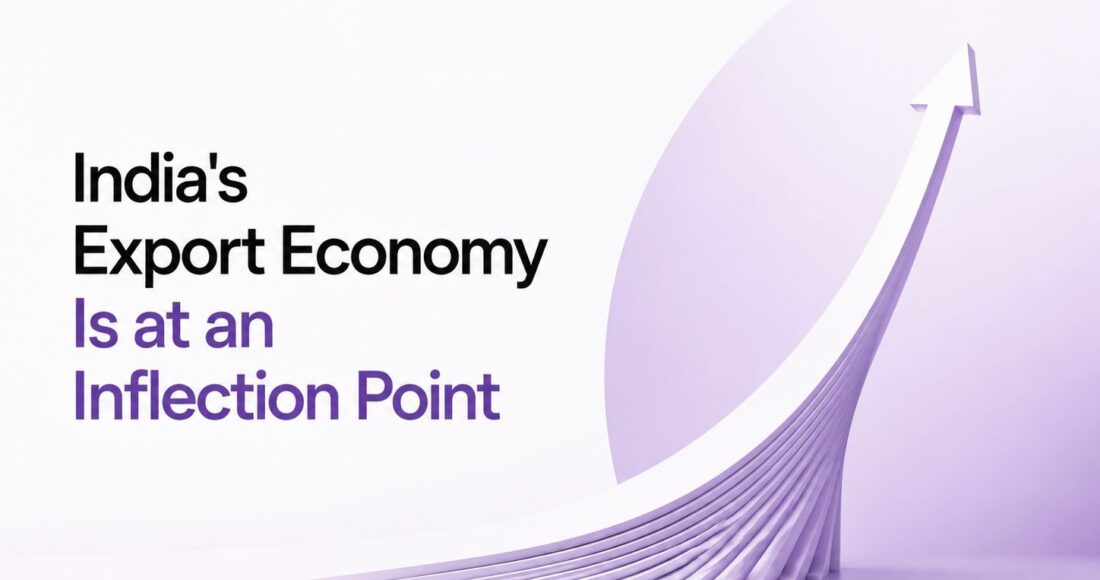
India’s service exports crossed $820 billion in FY25. Monthly service export figures from the RBI have been running at $33 to $38 billion through late 2025 and into 2026. The World Bank projects India’s services exports reaching around 11 percent of GDP by 2030, up from 9.7 percent in 2023.
These are large numbers. What they represent, at the ground level, is millions of businesses and individuals who regularly receive money from foreign clients and need that money to arrive quickly, cheaply, and without a compliance headache attached.
Right now, for most of them, it does not work that way.
Who Is Actually Exporting
The narrative around Indian exports tends to focus on large IT firms and enterprise software companies. The real cross-border payment problem sits with a different, much larger group.
India had an estimated 15 million independent workers and freelancers as of 2020, a number that has grown steadily since. NITI Aayog projects the gig workforce reaching 23.5 million by 2029-30. A significant share of these workers serve international clients, which means they deal with cross-border payments on a recurring basis.
Then there are the MSMEs. Over 40 million are registered on the Udyam platform. MSME-specified products have historically accounted for over 43 percent of India’s total exports by value. These businesses are exporting at scale, but many are running their payment operations through the same correspondent banking infrastructure that was designed for institutional-level transactions.
The Infrastructure Gap
The problems are consistent across this entire segment. Banks take 3 to 5 business days to settle international transfers. Currency conversion adds cost and time. FIRA documentation has to be generated and filed. EDPMS entries require manual closure. For businesses that do not have a dedicated accounts or compliance team, this is a disproportionate operational burden.
There is also a fragmentation problem. A freelancer, a D2C brand, and a B2B services firm all have different payment structures, different compliance requirements, and different receivables patterns. Legacy banking systems were not designed to handle all three with a single unified API.
The Opportunity Is Large, and Mostly Untouched
The gap between India’s export ambitions and the quality of its payment infrastructure is not a minor inconvenience. It is a constraint on growth. Businesses that cannot predict when payments will arrive, or that lose meaningful revenue to FX charges on every transaction, are businesses that have a harder time scaling.
Modern cross-border payment infrastructure solves this at the API level. Virtual accounts in local currencies. Real-time FX at mid-market rates. Automated FIRA and EDPMS. Coverage across 160 countries. One integration point, regardless of whether the client is paying in USD, EUR, GBP, or SGD.
LP Fintech builds this infrastructure specifically for the Indian market, including NBFCs, fintech platforms, merchant aggregators, and exporters of every size. The export economy is growing. The companies that invest in modern payment infrastructure now will be better positioned to handle the volumes that are coming.